
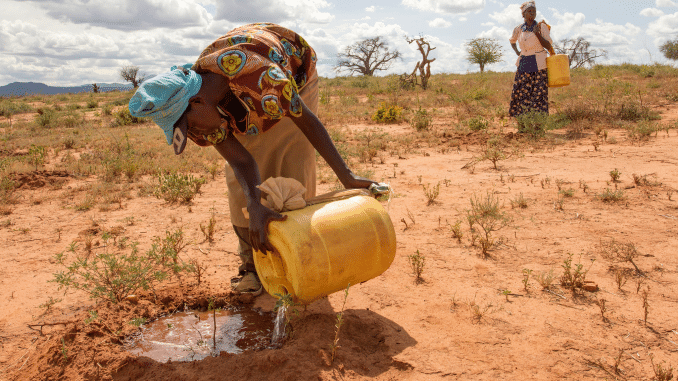
Mr Martin Segtub, a Climate Change Communications Researcher has said climate change poses more threats to women than men especially in developing countries.
He explained that climate change affected women in areas such as agriculture, trading, land acquisition, migration, health and acquisition of financial resources.
Women he noted were the most vulnerable and affected by the effects of climate change especially on migration and famine because they were often responsible for gathering and producing food, collecting water and sourcing fuel for heating and cooking.
Mr Segtub made this known at a two-day workshop organised by the Ghana Journalists Association (GJA) in partnership with the International Federation of Journalists in Accra to build the capacity of journalists on solution-based climate change reportage.
The tasks of these women become difficult for them and extreme weather events such as droughts and floods had a greater impact on the poor and most vulnerable especially with 70 per cent of the world’s poor being women, he said.
Climate change is a change in the pattern of weather, and related changes in oceans, land surfaces and ice sheets, occurring over time scales of decades or longer.
It is caused by burning of fossil fuels, deforestation, increasing livestock, and use of fertilisers containing nitrogen and fluorinated gases.
Climate change has a number of consequences such as rising global temperature, warming of the oceans, decreased snow cover, rise of sea level, food insecurity, extreme rainfall, floods, wildfires and droughts on the environment and human lives.
Making reference to a report from the Food and Agriculture Organisation (FAO) of the United Nations (2007), Mr Segtub said women supplied a large proportion of agricultural food crops, and 52 per cent of women in Ghana were into the agricultural work force with 70 per cent of them being food producers.
He reiterated that it was unfortunate how women still faced a number of challenges such as inequity and inequalities with regard to opportunities like ownership of land, limited access to hired labour, engagement in income generating activities and financial resources, as well as difficulty in adopting new technologies for crop production.
Mr Segtub said in sub-Saharan Africa, it had been calculated that agricultural productivity could increase by up to 20 per cent if women’s access to resources such as land, seed and fertiliser were equal to men’s (DFID 2007).
“The number of hungry people could be reduced by more than 100 million people if women in rural areas were given equal access to the same resources as men (FAO 2011),” he added.
Mr Kofi Yeboah, a Communications Lecturer and the General Secretary of the GJA, speaking on the topic, “Writing Compelling Climate Change Stories,” advised journalists to tell more success stories on how people were finding solutions to problems of sanitation and climate change.
He asked them to monitor the role and responsibility of state actors in the control of climate change and play their watchdog role effectively.
“You also need to educate the public on how climate change affects men, women, and children and do not forget to look at every new policy or intervention with your climate change lens,” he added.
Credit: GNA


Leave a Reply
You must be logged in to post a comment.